Featured

Students Push for Walk Out at Mercer County High School

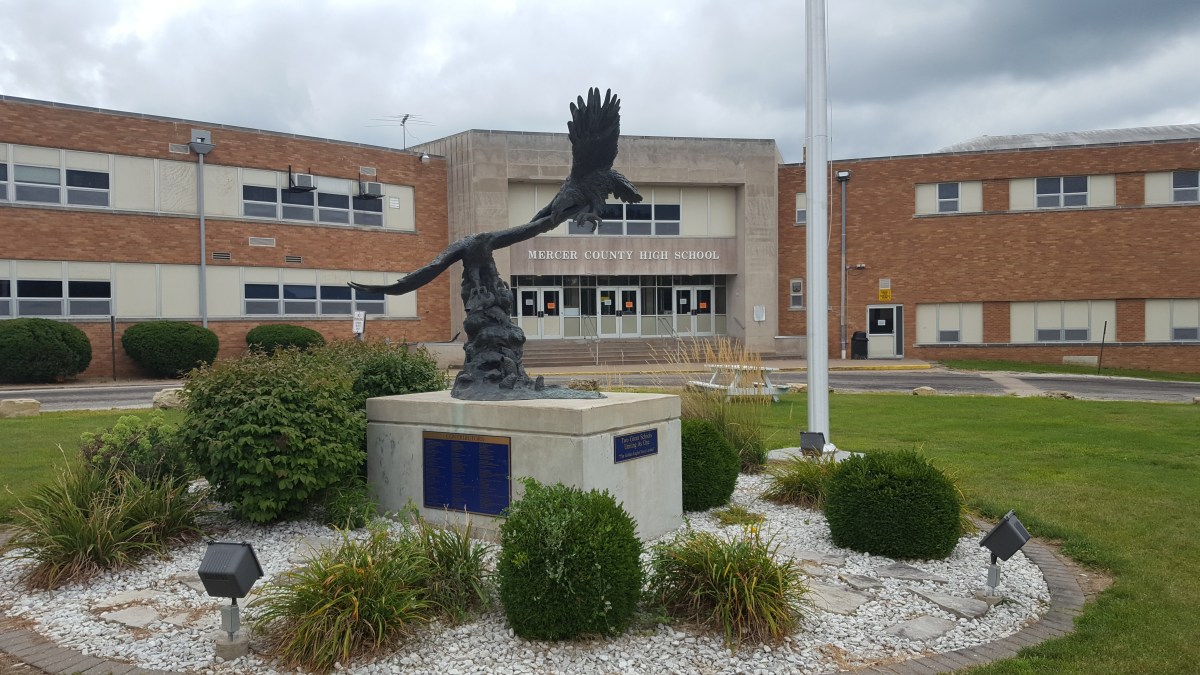
A threatened walk-out to protest gun violence produced mixed results for students at Mercer County High School in Aledo, Illinois. The protest was organized by Mercer County junior Lauren Morby in response to the Parkland school shooting in Florida earlier this year. 

Morby and some of her fellow schoolmates first went to the school’s principal to notify him of a potential walk-out. The principal and superintendent didn’t outright prohibit a walk-out, but they maintained that any student who walked out of class would receive an unexcused absence as punishment. Very few students were willing to participate in the walk-out with this punishment looming over their heads, according to organizers. 

The school board then held a meeting to determine if students would be allowed to participate in the walk-out without receiving unexcused absences. Student organizers then approached a local radio reporter to publicize the potential walk-out and school board meeting. The school board ultimately voted to uphold the unexcused absences, which really hurt the momentum for the protest. “We were obviously devastated but were still going to do it,” said Morby, in response to the school board vote. 

With very few students willing to be punished by participating in the walk-out, Morby and Mercer County school officials reached a compromise. There was a non-mandatory assembly planned at the school to honor the lives of the Parkland students, but at Mercer, the subject of gun control would be disallowed. Of the 400 students enrolled at Mercer, Morby said half attended the assembly. Even though Morby and fellow organizers feared protests from Second Amendment activists, these protests did not happen and the assembly went smoothly. “I hope I left an impression for more students to speak out on what was wrong,” said Morby, reflecting on the assembly. 

Morby said that since Aledo is a conservative town in rural Illinois, the initial response to the potential walk-out was negative. She added that the Aledo community is very passionate about Second Amendment rights. However, there was support offered for the student walk-out in the community by those who lean more liberal. Ultimately, according to Morby, the Mercer County school assembly compromise led to an overall positive response within the Aledo community.

Saint Louis University Provides Stimulus for Students in Need

SLU is one of more than 5,000 universities around the country who received money from the CARES Act for student aid.

While many college students around the country were not directly provided with financial aid from the federal stimulus package known as the CARES Act, numerous universities around the country have been given money for students. Saint Louis University was included in the list of more than 5,000 universities around the country who have received federal aid, ultimately amounting to $5.14 million.

According to SLU’s Vice President and Chief Financial Officer David Heimburger in a university press release, half of the $5.14 million – $2.57 million – will go directly to students who need it the most “based on unexpected changes and expenses.” The other half of the federal aid will go towards the university’s approximate $10 million cost recovery from refunds issued for room and board. Heimburger said that these amounts do not include the $1.67 million that SLU’s medical practice received from the stimulus package.

The CARES Act instructed universities like SLU to direct the student aid towards current undergraduate and graduate students who have incurred COVID-19 related expenses, according to Heimburger. “Financial questions and concerns voiced by SLU families have helped guide how to best distribute this aid, in adherence with the federal guidelines,” he said.

Heimburger added the federal act encouraged SLU to give special attention to students with unmet needs and Title IV eligible students. However, Heimburger pointed out that the CARES Act did not address COVID-19 related expenses incurred by international students, DACA students, or students who were already enrolled in exclusively-online programs, such as SLU’s School of Professional Studies.

To help SLU identify students’ needs, Heimburger said that the university is asking all students who were financially harmed by COVID-19 to fill out the COVID-19 Relief Request Application so that SLU can learn if students are eligible for the CARES Act aid, the student emergency fund, or “other forms of institutional aid.”

According to Heimburger, there are two phases of CARES Act grants for eligible students: immediate, need-based grants ($1.5 million total) and unexpected expenses grants ($1.07 million total).

The $300-$500 immediate, need-based grants will automatically be distributed to students whose Estimated Family Contribution (EFC) on the 2019-2020 FAFSA filing is below $12,000. Heimburger said that the grant amount will be awarded on a sliding scale based on the family’s EFC.

SLU expects around 3,500 students to be awarded grants, according to Heimburger. This money will be distributed by May 8 to the students’ MySLU account similar to housing/dining refunds. “Because these grants are automatic, there is no further action required by those students or their families,” said Heimburger. 

Unexpected expenses grants, on the other hand, include the unexpected costs students have incurred due to the switch from face-to-face interaction to remote learning. According to Heimburger, these costs include (but are not limited to) food, housing and moving expenses, technology, transportation, child care, medical expenses, and increased utility costs.

Heimburger asserted that the aid award amounts will vary based on need and funding availability after SLU reviews the student’s COVID-19 Relief Request Application. The maximum amount awarded to students will be $500. The application will be available to students as long as funds are still available, according to Heimburger. The Vice President and CFO noted that SLU expects to process funding decisions within five days after receiving an application. “Please note that in some cases, additional documentation may be required, which could extend our response time,” said Heimburger.

According to Assistant Vice President of Strategy and Communication Clayton Berry, more than 1,600 students have already filled out COVID-19 Relief Request Applications. Berry said that Heimburger’s message was emailed to students, parents/families, faculty and staff in order to ensure all SLU students were being reached regarding financial relief opportunities. The message was also shared through the university’s official Twitter, Facebook and LinkedIn accounts, posted on SLU’s COVID-19 website, and published in the Newslink email for faculty, staff and students. In an informal survey conducted on nine SLU students, six said that they have seen or read Heimburger’s message. This survey helped to provide additional insight into the overall effectiveness of SLU’s outreach efforts on this issue.

In the press release issued by the CFO’s office, Heimburger said that he hoped the information provided will be useful for SLU students and families in need. “The pain this pandemic has caused our community cannot be understated,” said Heimburger, “Know that we are here for you. We are OneSLU.”
St. Louis Shoppers Stock up Without Leaving Their Homes

While St. Louis County has issued a stay at home order for over two weeks, many people have still needed to go to the grocery store.

ST. LOUIS COUNTY – County Executive Sam Paige issued a stay-at-home order to fight the coronavirus that went into effect on March 23. This has forced many county residents to get creative when it comes to grocery shopping. Locals have been seen wearing homemade masks, disinfecting their groceries, and going to the store at odd hours in order to limit exposure to COVID-19. 

Some shoppers have opted to not enter the grocery store altogether. Mary Jo Thierry, a South County resident, said, “So I’ve figured out a way to sign up for Aldi delivery where if you’re really flexible for the whole week you can put in your order and change it up to the moment they deliver it. I’m also looking at pick up options, so I’m trying to do, if at all possible, not to go to the grocery store for the short term. At all.” Thierry will have plenty of time to refine her grocery shopping process since Gov. Mike Parson has issued a statewide shelter-in-place order running through April 24th.


Krippene Carries on Family’s College Legacy

Krippene in attendance at the Veiled Prophet Ball on December 21, 2019

Saint Louis University sophomore Erin Krippene comes from a big family with deep ties to the university. Krippene has aunts, an uncle, her mother, and siblings who all attended and graduated from SLU. Krippene said that her family’s strong connections to the St. Louis Catholic university had a significant influence on her perception towards the school while growing up. 

Although Krippene had a strong connection to SLU in her childhood, she actually opted to attend Rockhurst University in Kansas City after graduating from St. Joseph’s Academy in St. Louis. Krippene initially attended Rockhurst because she thought it would be a good fit for her since it was “a small school with more options for leadership opportunities.” However, after attending Rockhurst for only eight days, Krippene changed her mind. The 20 year old said that Rockhurst was a good school but she quickly realized it was not the best fit for her. Since Rockhurst started a week before SLU, she was able to transfer to SLU on move-in day.

After now spending almost two years at SLU, Krippene maintained that she was happy with her decision to transfer from Rockhurst. “SLU is the perfect place for me, I would not want to be anywhere else,” said Krippene. Krippene is majoring in communications at SLU with a concentration in public relations and a minor in marketing. Krippene said that she wants to continue with a career in public relations, where she currently has a job with the St. Louis Cardinals. In her position with the Cardinals, Krippene assists in outreach relations, philanthropy, and giving back to the St. Louis community. After graduating from SLU, Krippene said that she wants to continue what she’s currently doing in public relations but at a more advanced level.

In regard to what she is most passionate about in this stage of her life, Krippene said she is a very family-oriented person. She grew up in Ladue with her parents, four sisters, a brother, and a dog. Krippene said that she grew up super close to her big family and would always spend time with them. “Family is always first.” said Krippene. Religion also played a very significant role in Krippine’s life, and still does. Krippine said that her family is devoutly Catholic and that she would participate in youth outreach and faith life programs during her time at St. Joseph’s Academy. 

When asked about who she saw as her role model throughout her life, Krippine said that it was her older brother Ryan, 23. Krippine said she really looks up to Ryan and how he is such an optimistic person no matter what is happening in his life. Krippine pointed to how Ryan is always able to make things more enjoyable, which was a significant reason she looks to him as her role model. “I always respected him for being a super respectful and genuine, down to earth guy who doesn’t conform to anyone else’s rules,” said Krippine.

Student Government Association Candidates for VP Discuss Their Visions for SLU’s Future

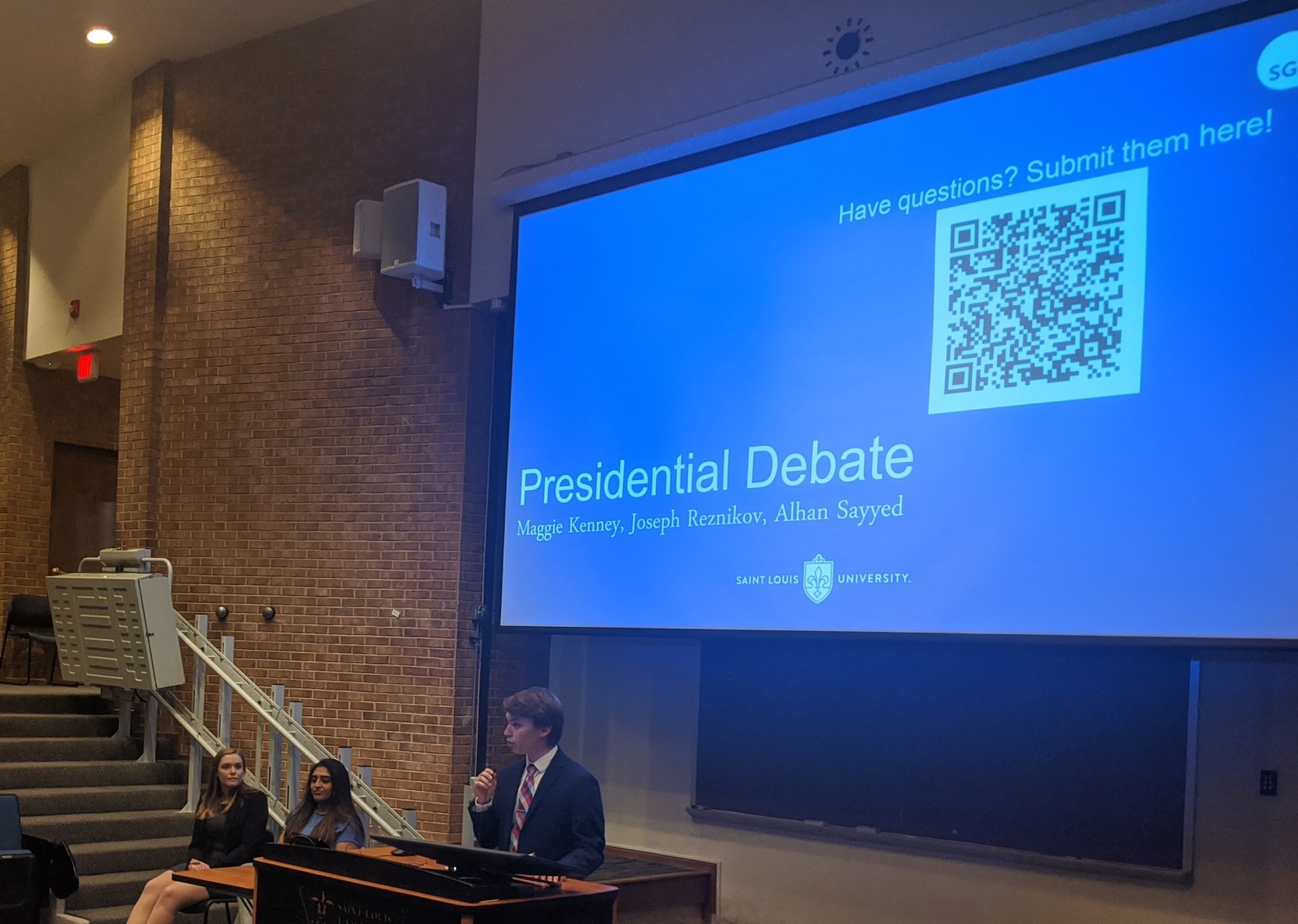
Carlo Auditorium was the site on Feb. 18 for the Student Government Association debates for President and Vice President. The candidates outlined the issues central to their respective campaigns and why they are worthy of votes from SLU students. While there was only one candidate each for three of the five positions, the Vice President of Academic Affairs position had two candidates vying for the office. 

After the candidates for SGA President answered questions and discussed their platforms, the Vice President of Academic Affairs candidates took the podium. The two candidates debating were Faith Nixon and Sophia Izhar. The candidates fielded questions from students and the Election Committee and discussed their visions for SLU’s future. 

Nixon is a sophomore who has held many leadership positions at SLU and currently serves as a committee chair on the Food Advisory Board. Nixon stated that her campaign is about “equity and inclusion.” She emphasized her campaign’s focus “on faculty involvement and development.” Nixon also pointed to the importance of providing more academic resources for students, particularly undergraduates. She put an emphasis on wanting to focus more on the Arts and Humanities at SLU as she believes that the university is “slowly focusing more and more on STEM.” 

In regard to changes that could be made at SLU or within SGA, Nixon stated, “I think SGA is operating at a really great level, I can always see it going farther. I definitely know we can achieve that next year.” If elected, Nixon’s main goal as Vice President of Academic Affairs “would be a resource to everybody I come in contact with.” 

Izhar is a sophomore running on Sayyed’s ticket who has served as a senator for the College of Arts and Sciences and has sat on the Academic Affairs Committee. Through her service in various leadership roles, Izhar said she has been able to see how SLU functions in an academic setting. In her opening statement, Izhar stated that one of her campaign’s goals is “making sure there is representation of marginalized identities” on all university committees by nominating these students to committees so their voices are better heard. Additionally, Izhar touched on how she wanted to centralize student resources in one location so that they are more easily accessible. In regard to changes she would like to see at SLU, Izhar mentioned how she wants to break the SLU “bubble” and how “at times we don’t venture out to make sure we are interacting with our community, which is central to a Jesuit ideal.” When asked about handling delicate situations on campus as Vice President of Academic Affairs, Izhar believed that the most important thing is “to have a foundation of respect and trust.” Izhar stated that maintaining a foundation of respect and trust between students and administration makes SLU’s administration more willing to listen to the student perspective.   

After Nixon and Izhar finished discussing their platforms, the debate concluded with candidates for the remaining uncontested VP positions discussing their respective platforms.

Local Journalists Offer Advice to SLU Communications Students

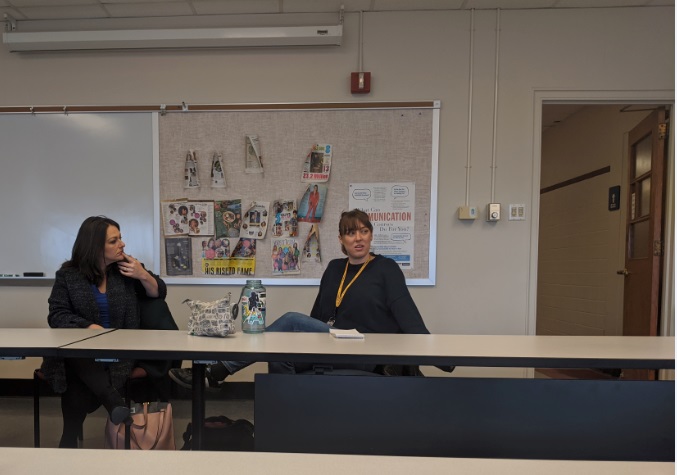
Journalists Sarah Fentem from KWMU and Lauren Trager from KMOV visited professor Jean Whatley’s news writing course at Saint Louis University on February 13 to provide students with insight into the field of journalism. Trager is an investigative journalist and member of the News 4 Investigates team while Fentem reports on sickness and health as part of St. Louis Public Radio’s news team.

“If there’s anything else that you like to do, do that.” Fentem said regarding career opportunities. She pointed out how, with the decline of print media, finding a stable job within the profession may be economically precarious. Trager echoed Fentem’s sentiments, “At the end of the day, the jobs are fewer and farther between.” 

While offering a bleak view on the future of the news writing profession, Fentem maintained that there are stable, albeit less traditional, writing jobs available with industry and online publications. Trager offered advice for journalism students to “diversify” their skillset. Students should get into journalism after graduation if that’s what they are truly passionate about but should be aware of the harsh realities facing the profession, according to Fentem and Trager.

Design a site like this with WordPress.com
Get started